Our Story
A history of dignity in practice.
From its beginning in Mohuda, Gram Vikas has always walked alongside rural communities in Odisha, bound by a shared sense of responsibility to the land and its people. Our work has restored natural ecosystems, built self-governing institutions, and reduced deprivations for millions across the state.
WATCH WITNESSING ODISHA

50
years
Milestones
Explore key moments from our journey that reflect long-term, community-led practice.
The Origins
We started by mobilising exploited rural communities to obtain their rights and entitlements and channelling human and financial resources to respond to their needs for essential services.
1971
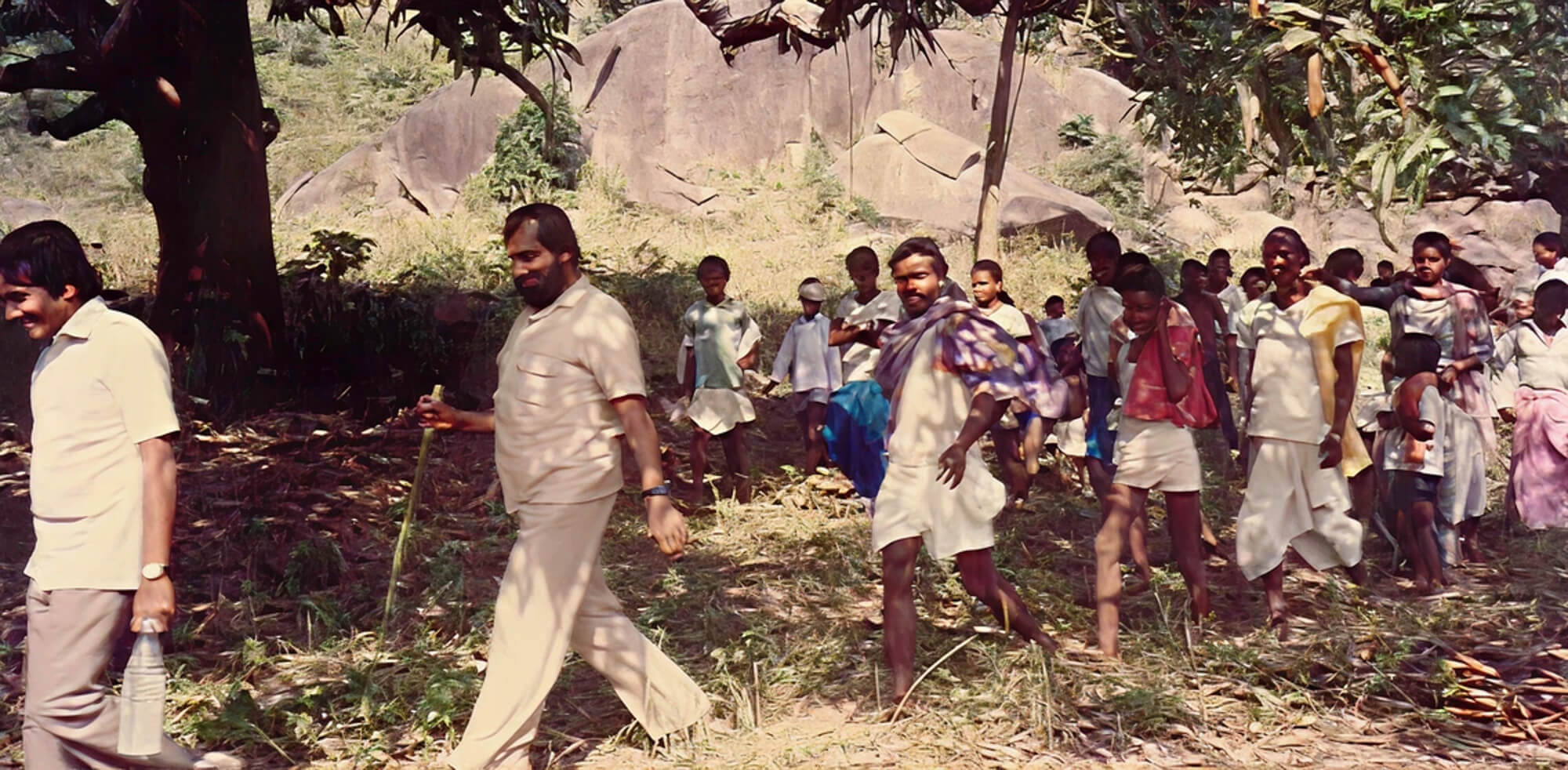
In 1971, a group of students from the University of Madras, under the Young Students Movement for Development (YSMD), travelled to West Bengal to relieve people affected by the war on the Bangladesh border. In October 1971, a few moved to Kendrapara district in eastern Odisha after a devastating cyclone to start relief operations. Students from the local area joined them. After the initial relief efforts, they worked on restoring livelihoods through improvements in irrigated agriculture.
1976
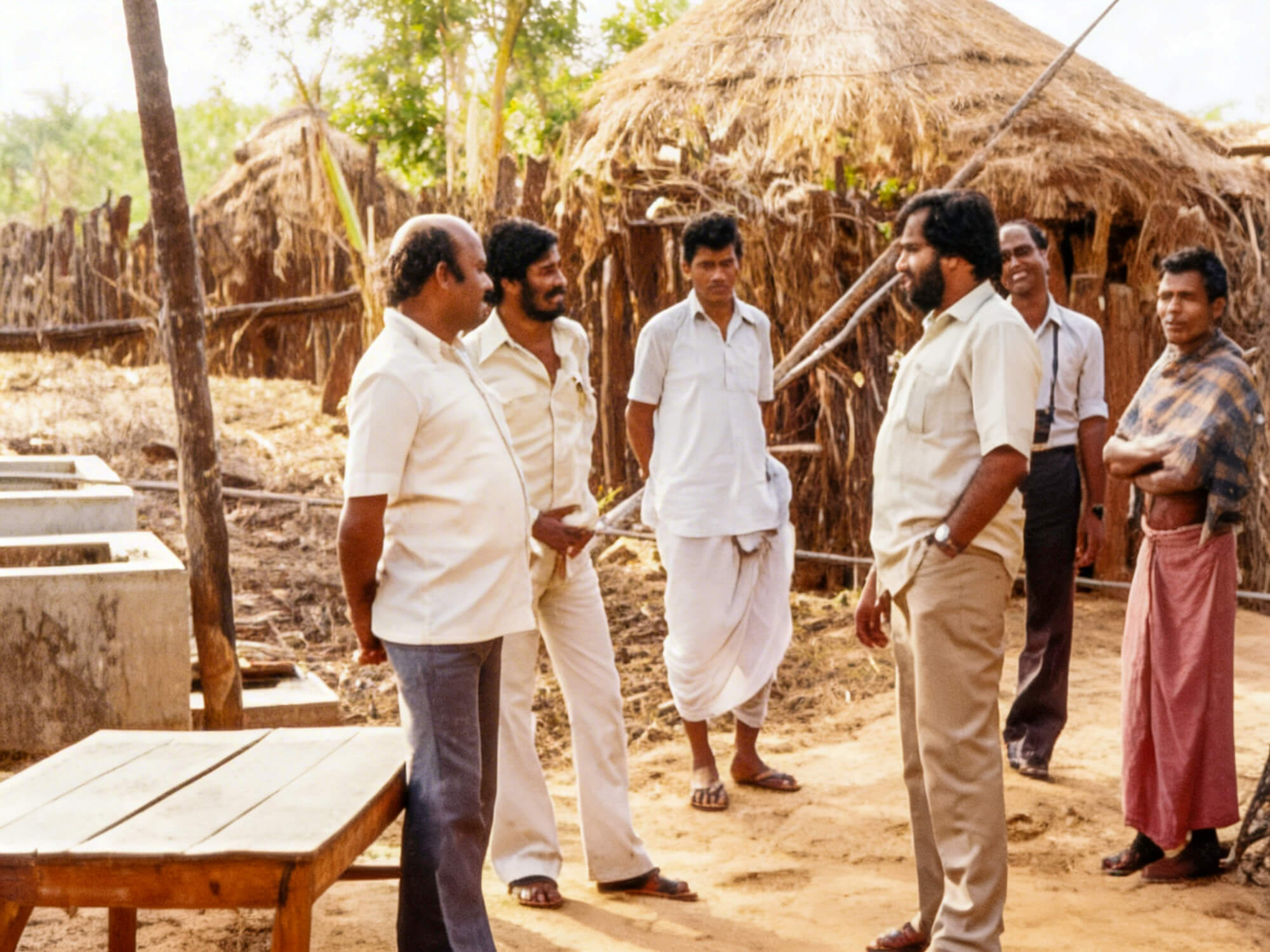
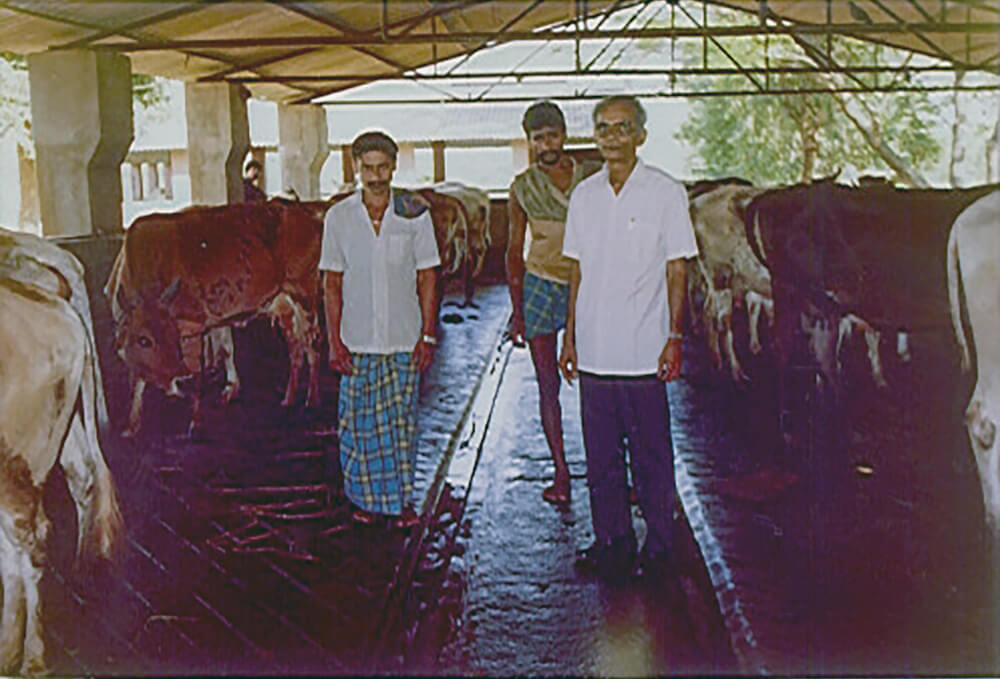
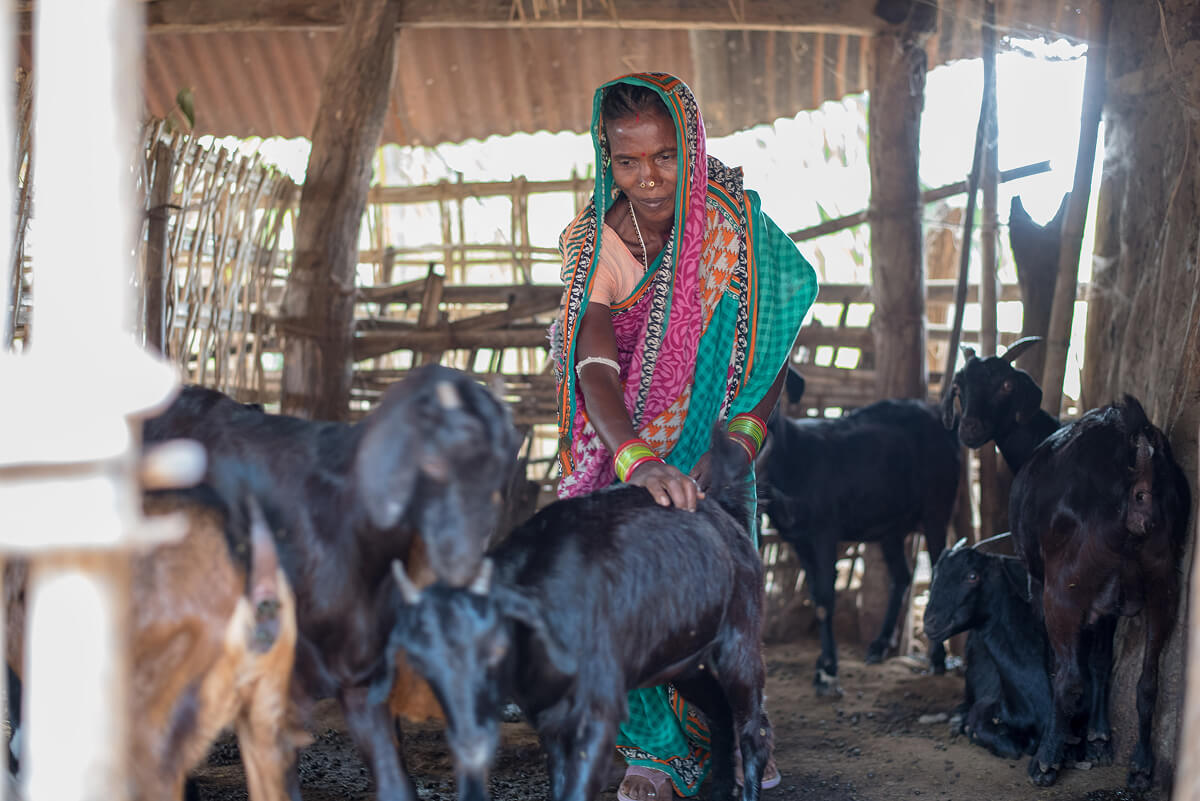
In 1976, the group moved to Ganjam district, Odisha, at the behest of the District Administration to initiate a dairy development project. As tribal communities resisted the idea of dairying, the group made efforts to address immediate issues of concern – ill health, illiteracy, land alienation and degradation of natural resources.
1979
The work done by the volunteers of YSMD in Ganjam led to the founding of Gram Vikas, which was registered on 22 January 1979.
The First Decade
Our interventions addressed the needs of rural communities in energy, education, health and natural resources in the first decade. We built models of communities and non-government organisations working effectively with the government.
1980
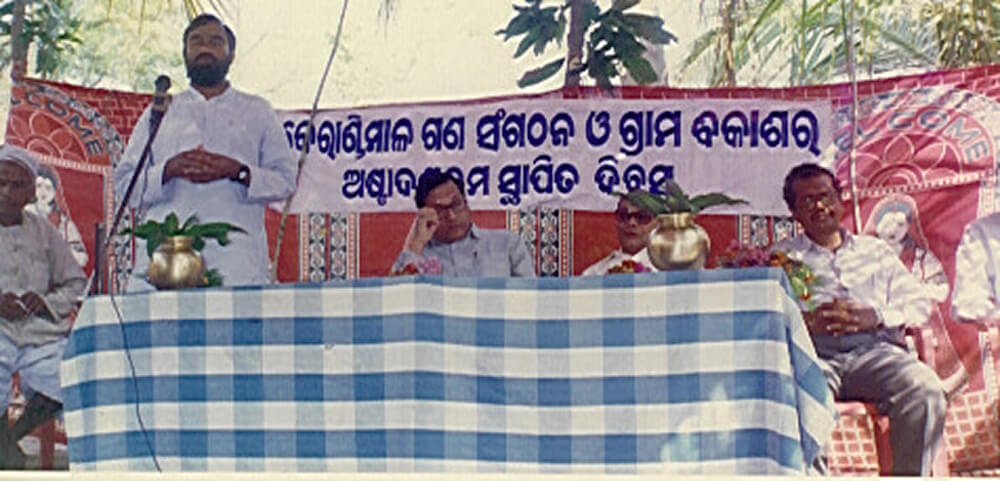
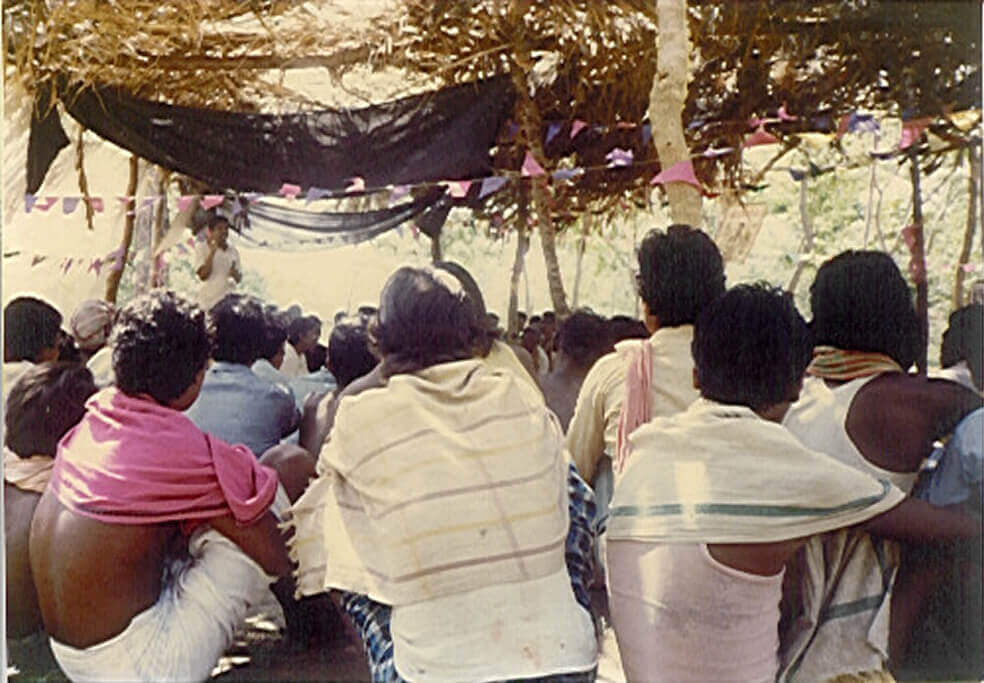
The work of the YSMD volunteers was in the villages of Kerandimal hills, in Digapahandi, Chikiti and Kukudakhandi blocks of Ganjam. The ‘Kerandimal Gana Sangathan’, a tribal people’s organisation, was mobilised to oust liquor merchants and exploitative moneylenders.
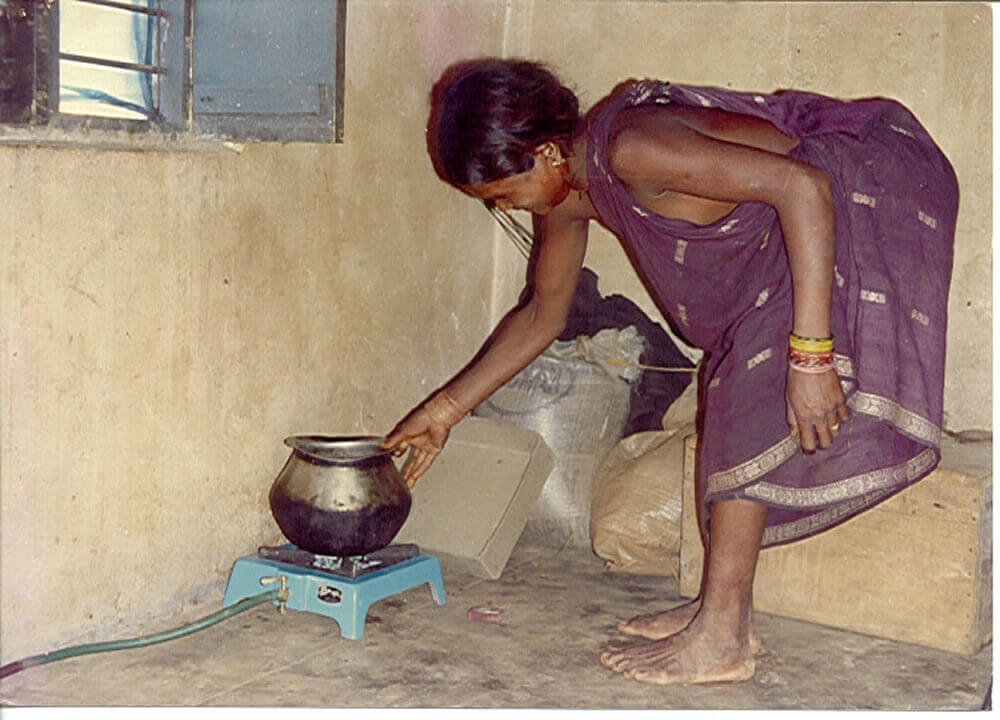
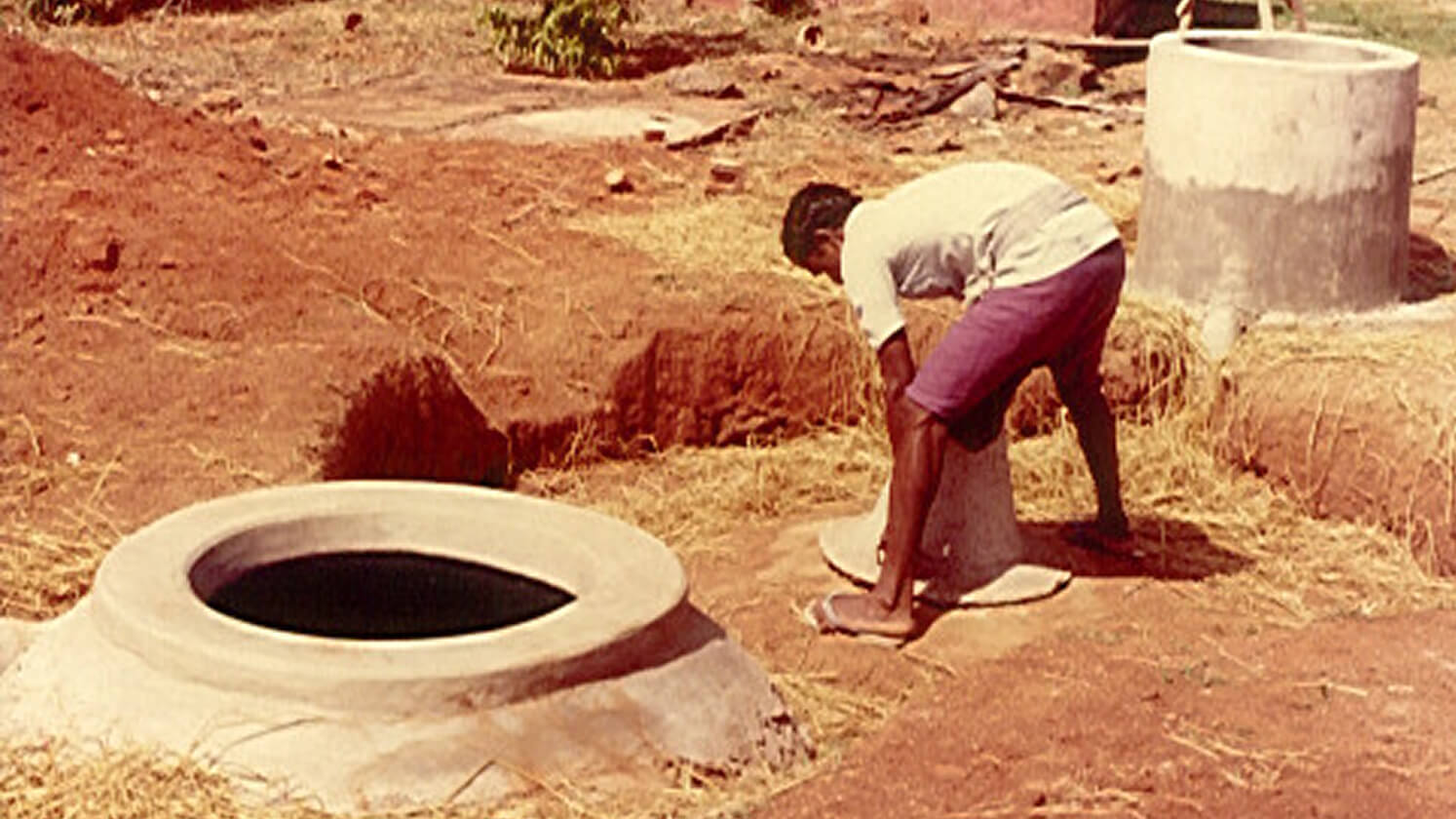
During the same period, we conducted successful experiments in setting up biogas plants to provide alternative fuel for households.
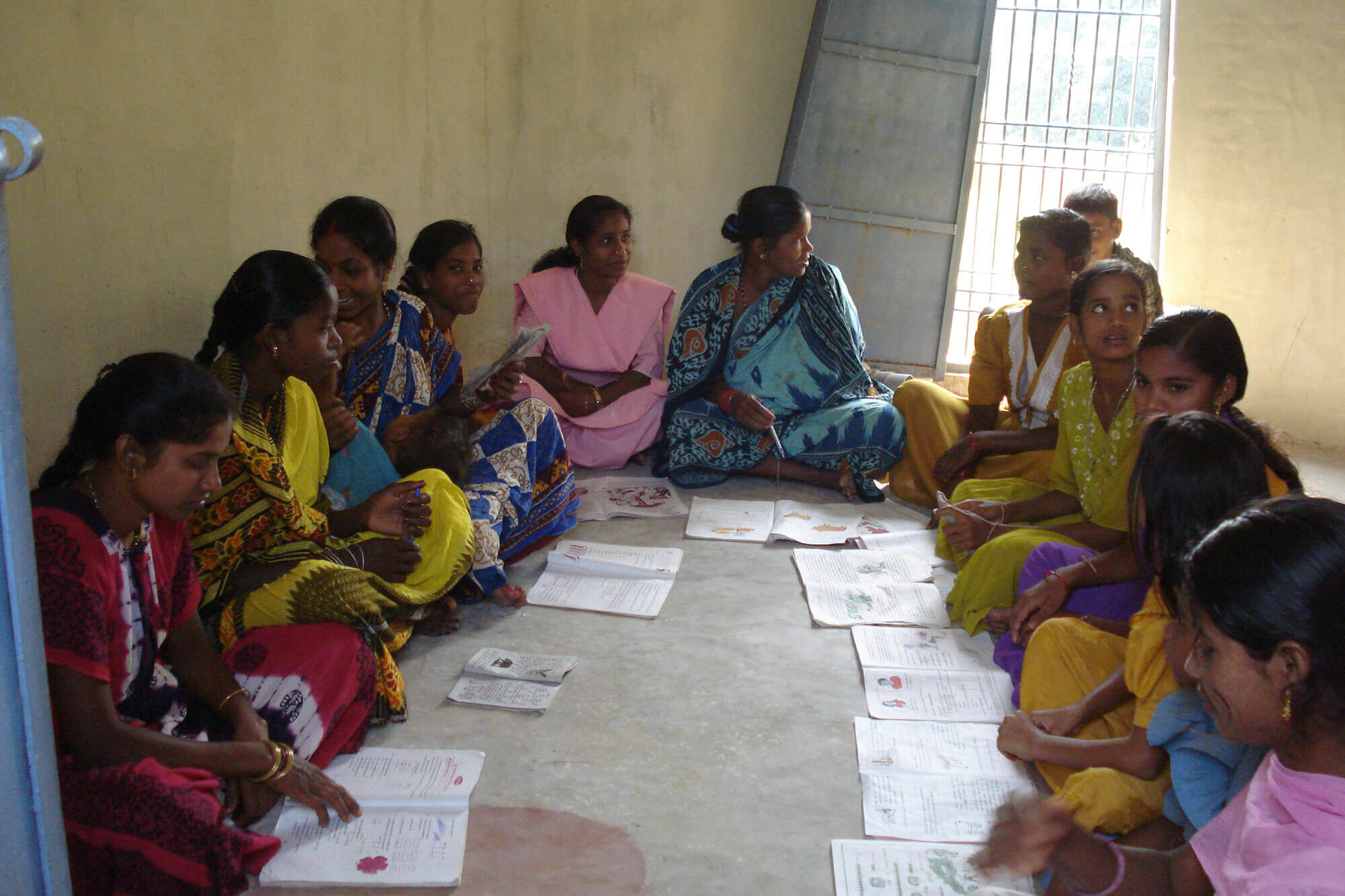
Non-formal education and adult literacy centres were set up across tribal villages by Gram Vikas to address the literacy gap.
1982
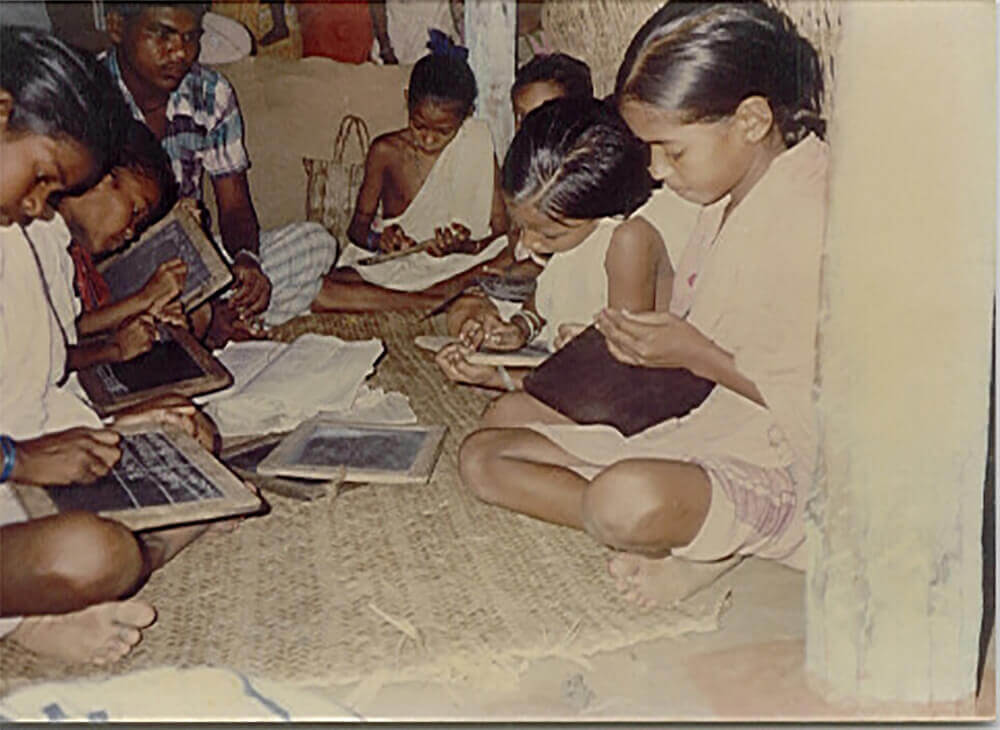
The Kerandimal Middle Education School started in 1982 as a residential school to cater to children from remote habitations of Ganjam.
1983
Gram Vikas took up the biogas programme at the organisational level, establishing itself as a pioneer in promoting renewable energy technologies.
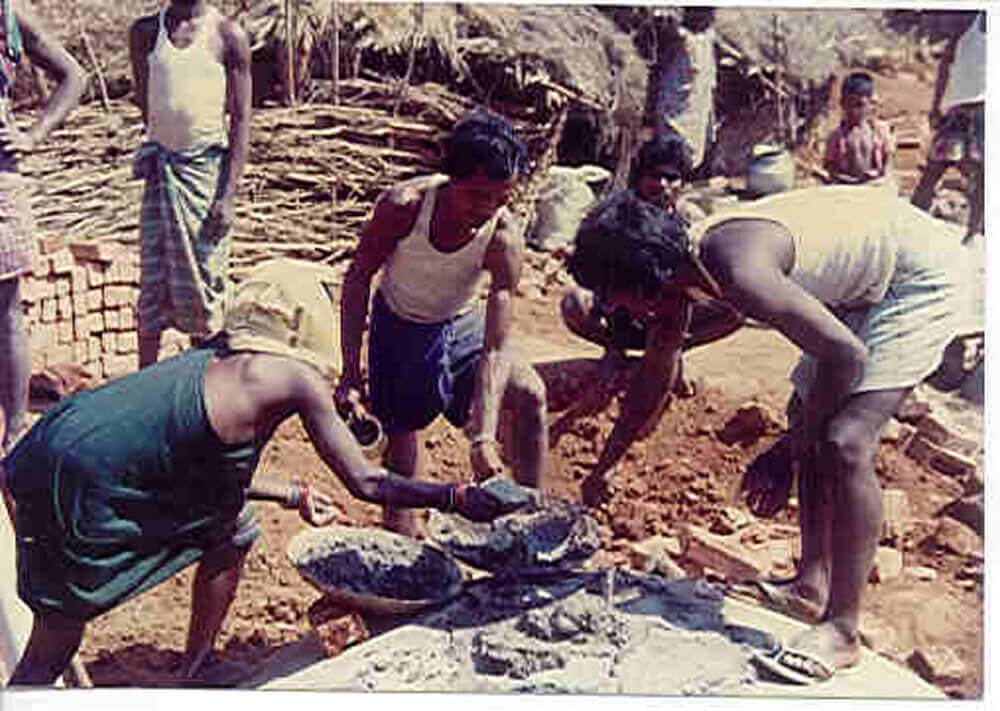
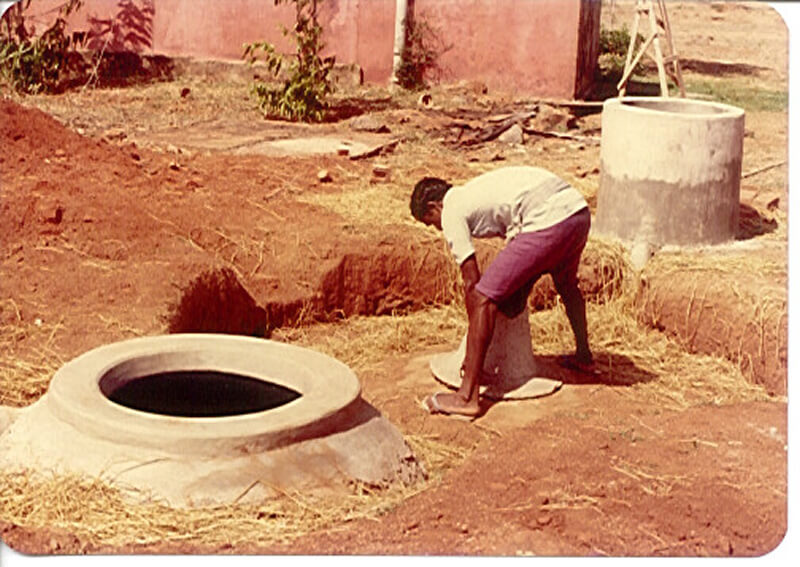
As part of the National Biogas Extension Programme, we undertook research and development in biogas plant design, trained a large pool of masons and technicians and built 54,000 biogas plants in villages across Odisha during the next ten years.
1985
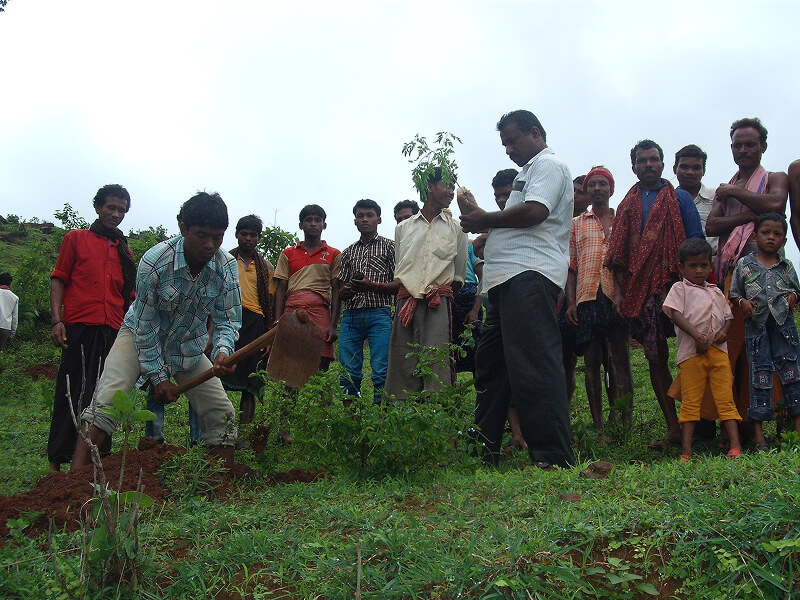
We launched the Social Forestry programme, mobilising tribal communities to undertake large-scale tree plantations on individual and community land. We did this in collaboration with the National Wastelands Development Board. Our work on soil and water conservation and fuel, fodder and fruit plantations restored over 25,000 acres of private and community wasteland.
As part of the National Biogas Extension Programme, we undertook research and development in biogas plant design, trained a large pool of masons and technicians and built 54,000 biogas plants in villages across Odisha during the next ten years.
1986
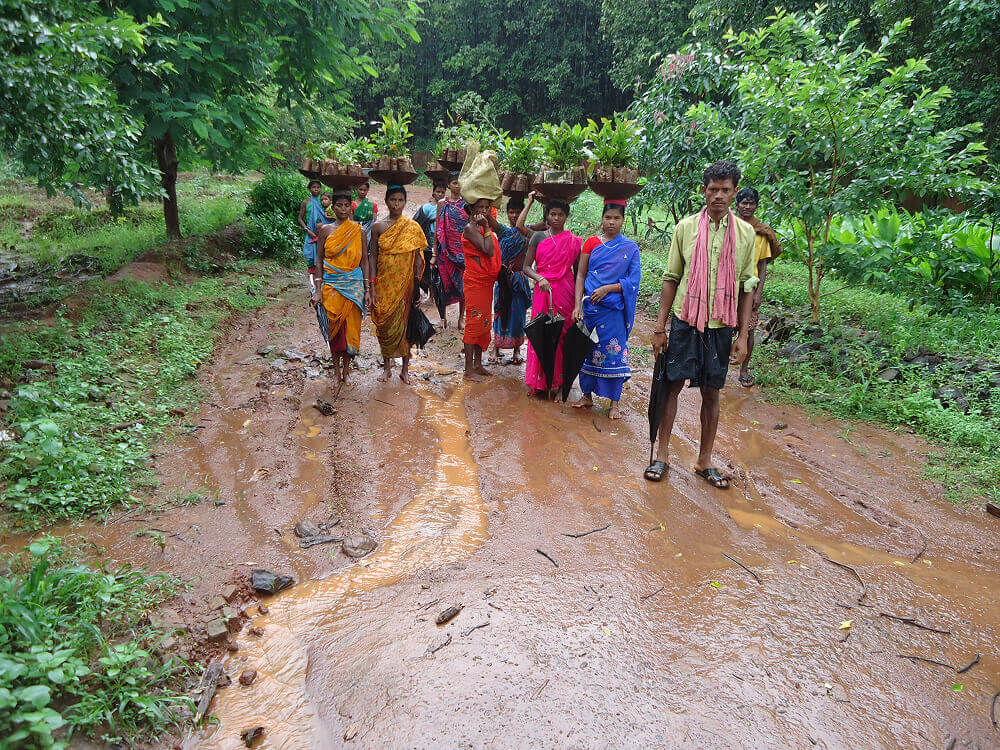
The recurring droughts in the tribal-dominated Thuamul Rampur block of Kalahandi District led Gram Vikas to start working with the communities there. In response, we established the Integrated Tribal Development Programme (ITDP).
1987
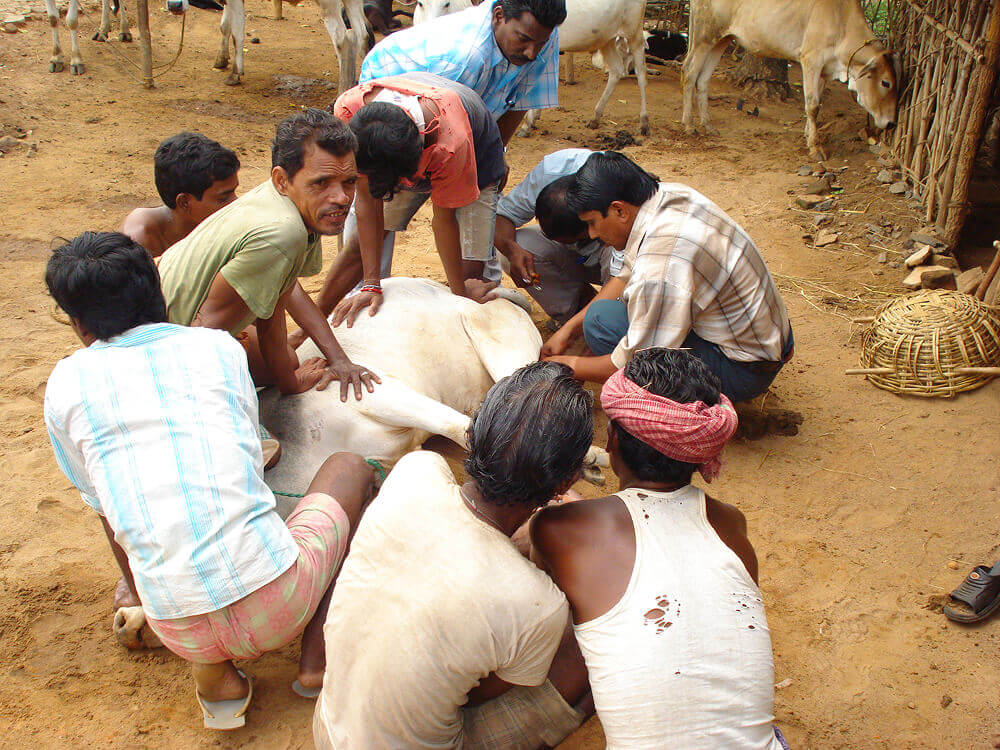
The Odisha Drought Action Forum, a network of non-governmental organisations with Gram Vikas as a founder member, was formed to address development issues emerging from the recurring droughts in tribal areas of Odisha. The forum eventually became the Odisha Development Action Forum and a key development actor in the State.
1988
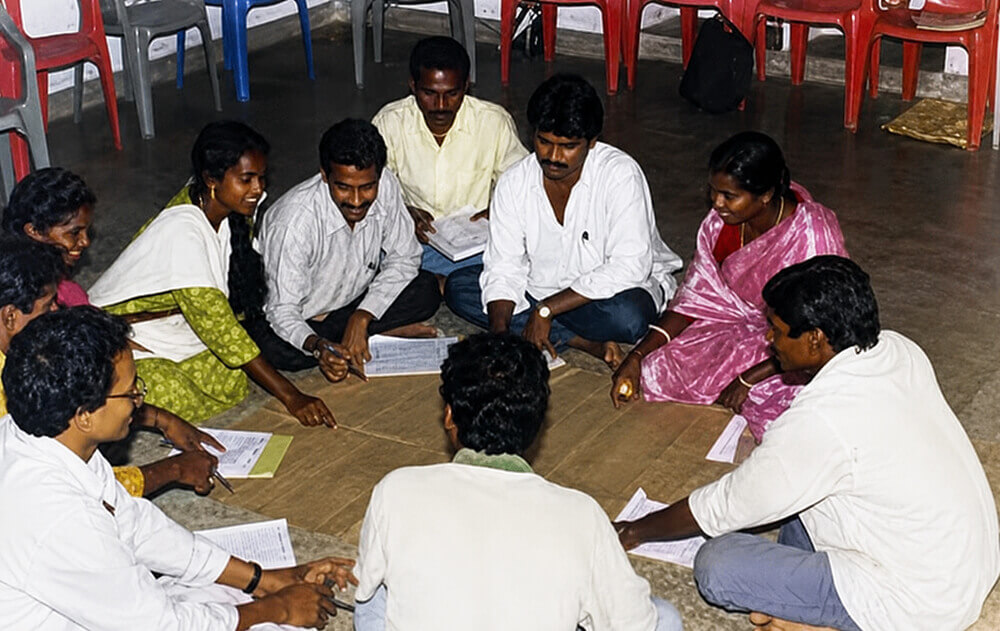
Once again, responding to a drought situation, we expanded the ITDP to cover the tribal hamlets in the Koinpur area on the foothills of the Mahendragiri peak, in what was then a part of the undivided Ganjam, now in Gajapati district. We also initiated ITDP in the Rudhapadar area of Jagannath Prasad block of Ganjam.
1989
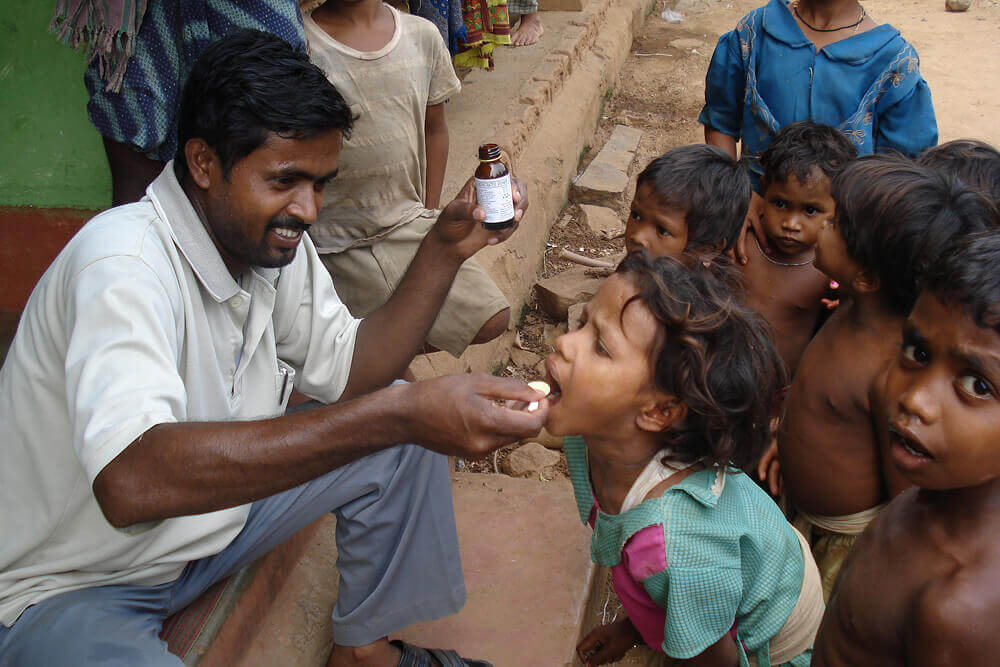
Gram Vikas supported the ‘Adivasi Bhumi Adhikar Sangha’ (tribal land rights movement) in Thuamul Rampur block of Kalahandi district to collectively resist the efforts by the administration to convert their farmlands into tea plantations.
The Second Decade
In the second decade, we innovated on ways to improve the quality of life of rural communities through water and sanitation, credit-linked housing and residential school-based education.
1990
Building upon the community linkages established through the Social Forestry programme, we initiated the Integrated Tribal Development Programme (ITDP) in the Tumba region of Patrapur block in Ganjam.
1992
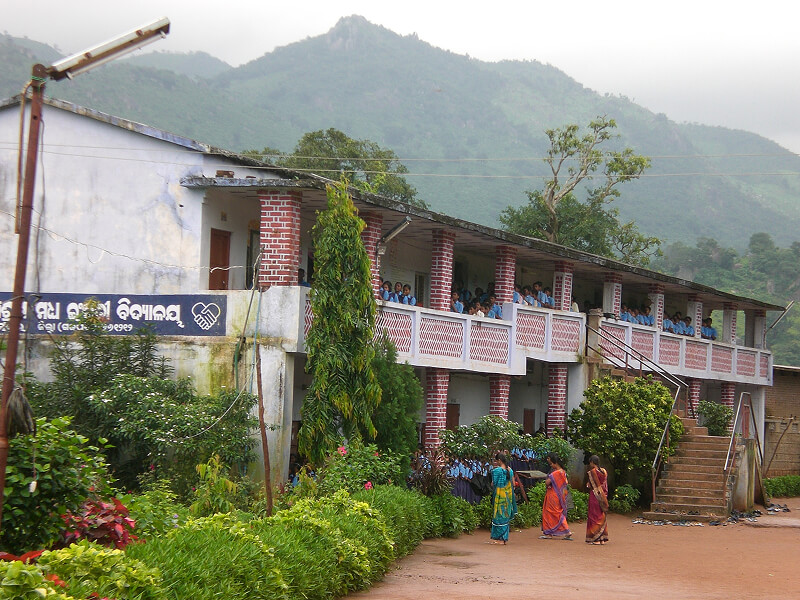
Expanding our work in education, Gram Vikas set up the Mahendratanaya Ashram School, a residential school for children from the Mahendragiri area of Gajapati district.
1993
After a decade of promoting biogas technology across Odisha, Gram Vikas withdrew from the programme, supporting trained technicians and masons to continue as renewable energy entrepreneurs or work with other agencies.
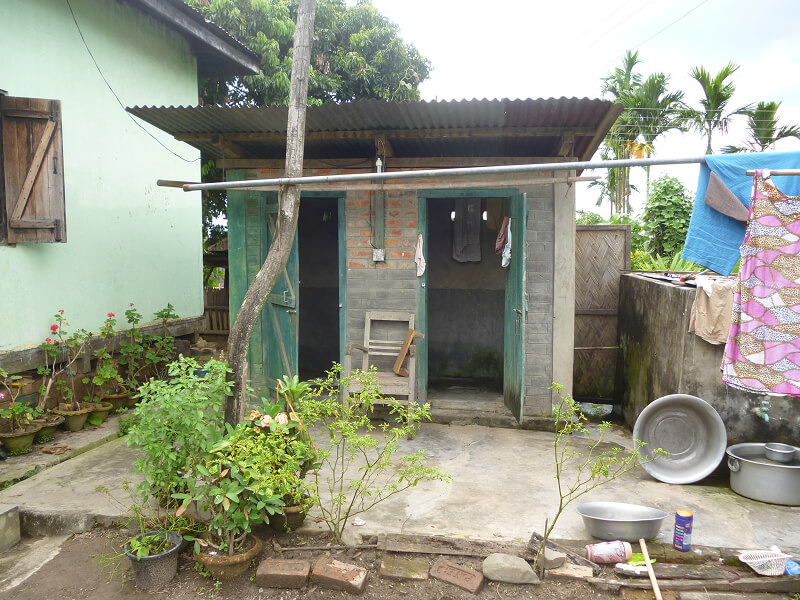
Building on its experience with technology-led development, Gram Vikas identified sanitation, unsafe drinking water, and related morbidity as critical concerns in tribal and non-tribal villages.
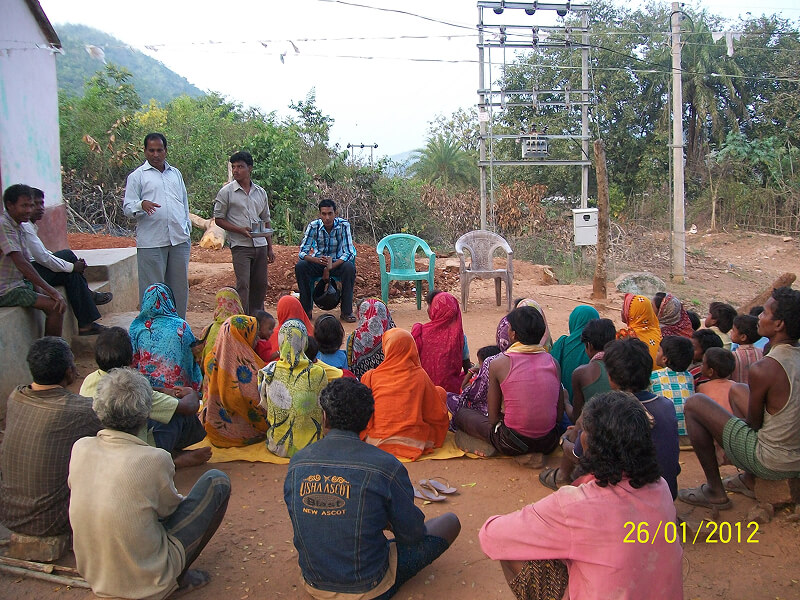
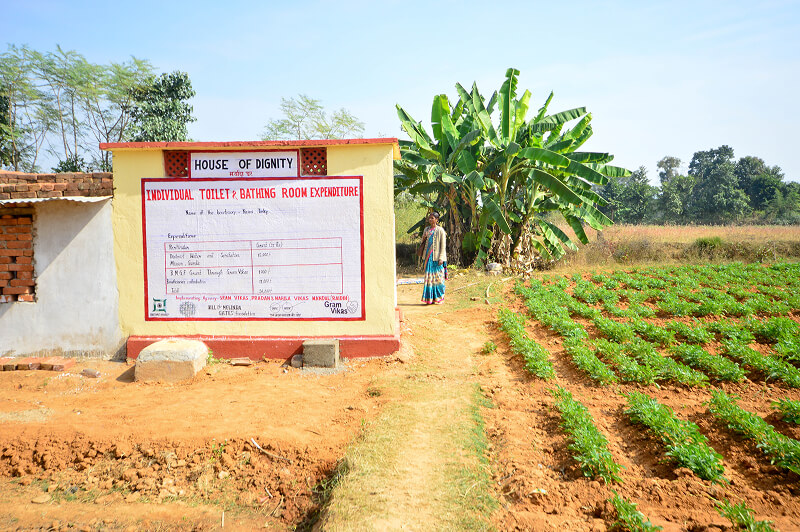
We initiated the Rural Health and Environment Programme (RHEP) in five villages in Ganjam and Bargarh districts to mobilise all households to construct toilets and bathing rooms. Additionally, it aimed to establish village-level piped water supply systems, providing each household with two (and later three) tap connections.
1994
We commenced the ITDP in the Karadasing area to build upon the linkages established through the Biogas and Social Forestry programmes in the Rayagada block of Gajapati district.
1995
On successfully completing the pilot projects in five villages, we started the first phase of RHEP. By 1998, Phase 1 would cover 40 villages.
With the support of the Council for Advancement of People through Application of Rural Technologies (CAPART) of the Government of India, Gram Vikas initiated the housing programme, supporting the construction of permanent dwelling units in the tribal areas.
1998
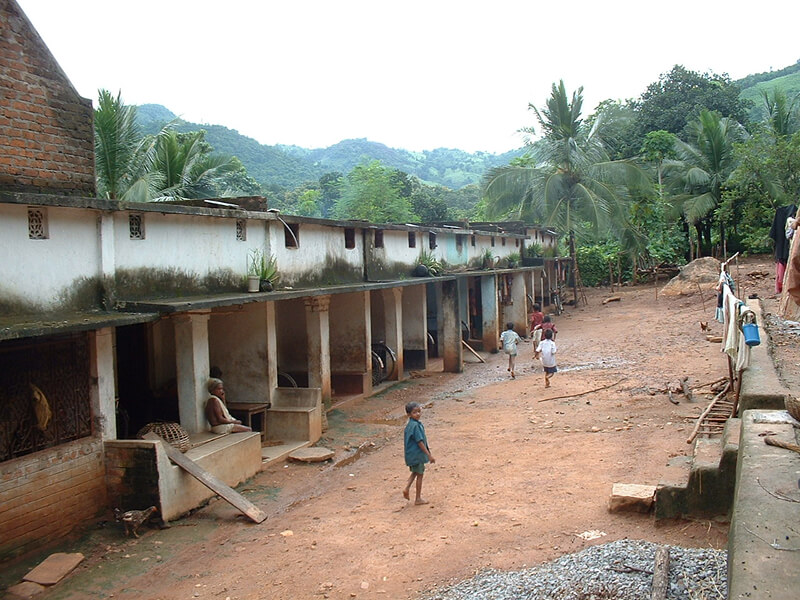
Our education programme for tribal children further expanded with one more residential school, the Gram Vikas Shiksha Niketan, in Thuamul Rampur block in Kalahandi.
Gram Vikas initiated the credit-linked rural housing programme in partnership with HDFC.
1999
The RHEP entered Phase II, expanding coverage to 61 villages. To ensure the sustainability of results, we restructured the ITDP with intensive work focussed on a smaller number of core villages.
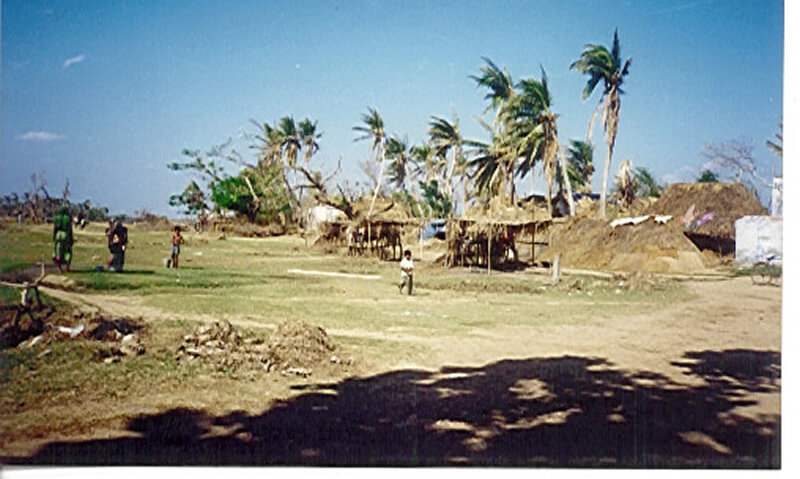
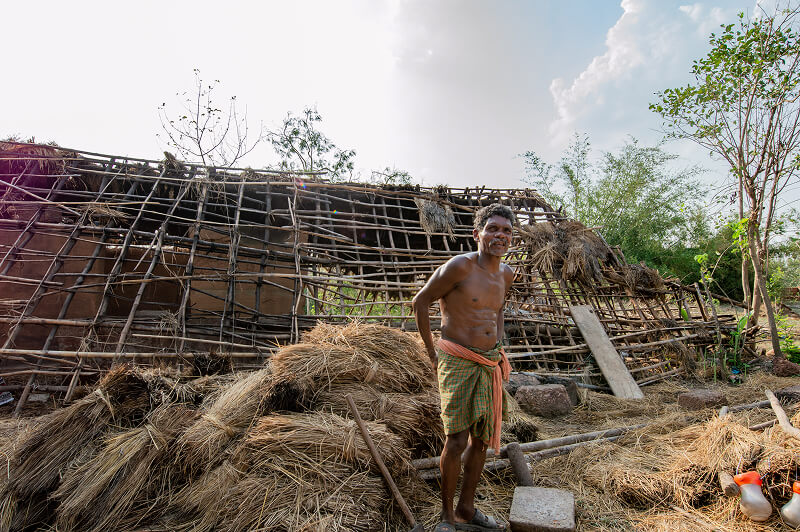
The two Cyclones that hit Odisha in October 1999 resulted in widespread damage to lives, property and livelihoods across Gram Vikas' operational villages. Gram Vikas offered immediate relief services in Ganjam and Jagatsinghpur districts.
The Third Decade
We built back better for the communities after the devastating cyclones, consolidated our work in water and sanitation and expanded our tested models beyond Odisha and India as we moved through our third decade.
2000
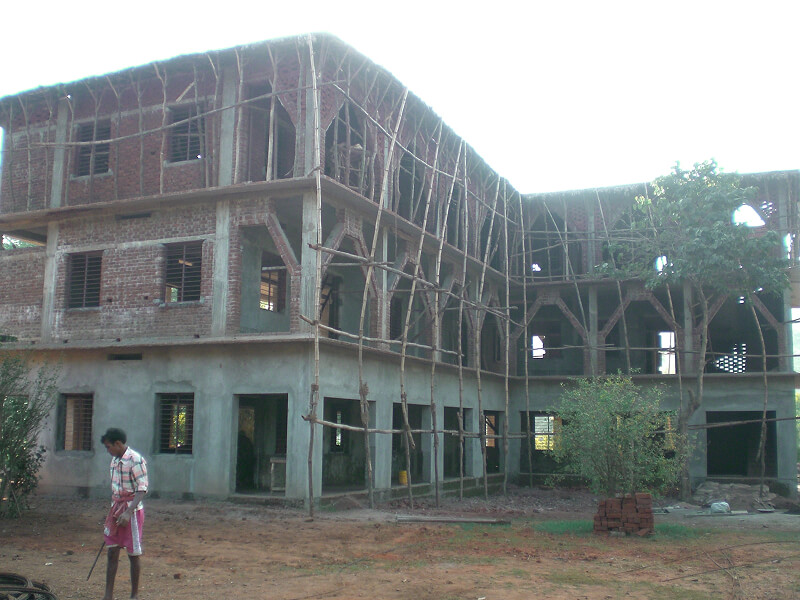
Gram Vikas took up post-cyclone recovery and reconstruction work in villages in Ganjam and Gajapati districts, focusing on building disaster-proof houses.
2001
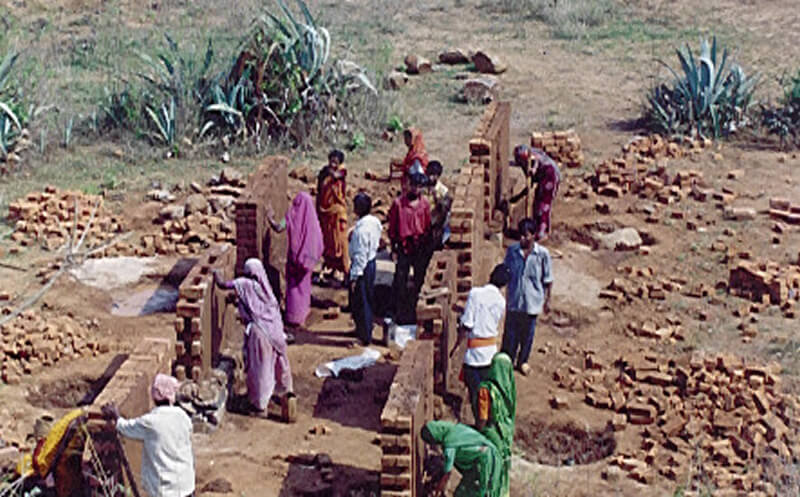
The Barefoot Engineers course for training construction supervisors started. Gram Vikas trained over 3000 masons and 50 Barefoot Engineers in three years to use cost-effective and environment-friendly (CEEF) construction methods.
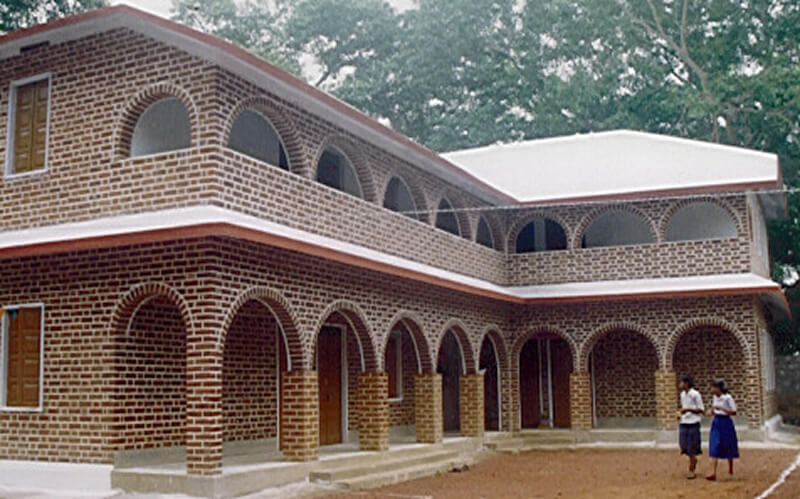
Gram Vikas supported the Government of Odisha in building cyclone-resistant school buildings using CEEF technologies. In three years, we constructed 39 school buildings.
Our fourth residential school, the Gram Vikas Vidya Vihar, started in Rudhapadar in the Ganjam district.
2002
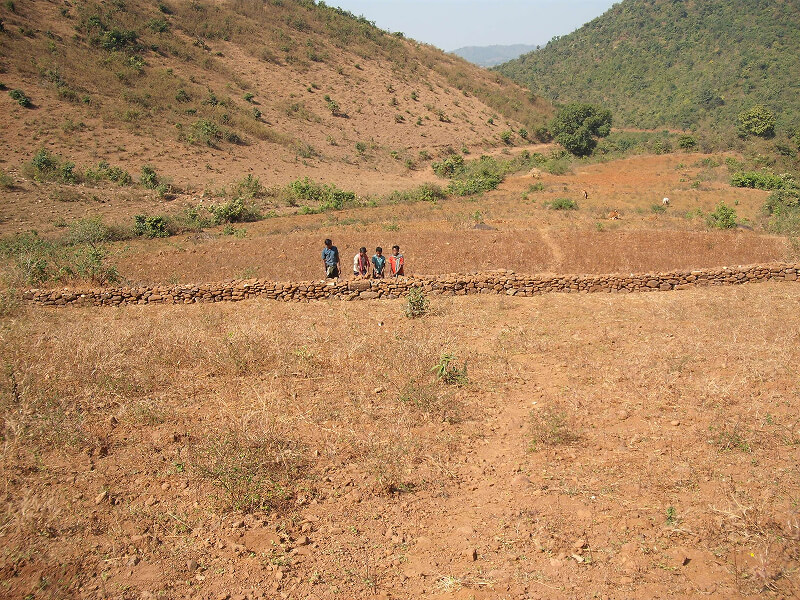
Recurring droughts in Western Odisha prompted Gram Vikas to undertake large-scale watershed development projects.
In the Bangomunda block of Bolangir, we undertook work under the National Watershed Development Programme and later under the DFID-funded Western Odisha Rural Livelihoods Project. In the ITDP project in Thuamul Rampur, large-scale watershed-based work was initiated.
A comprehensive external evaluation of Gram Vikas' work began.
2003
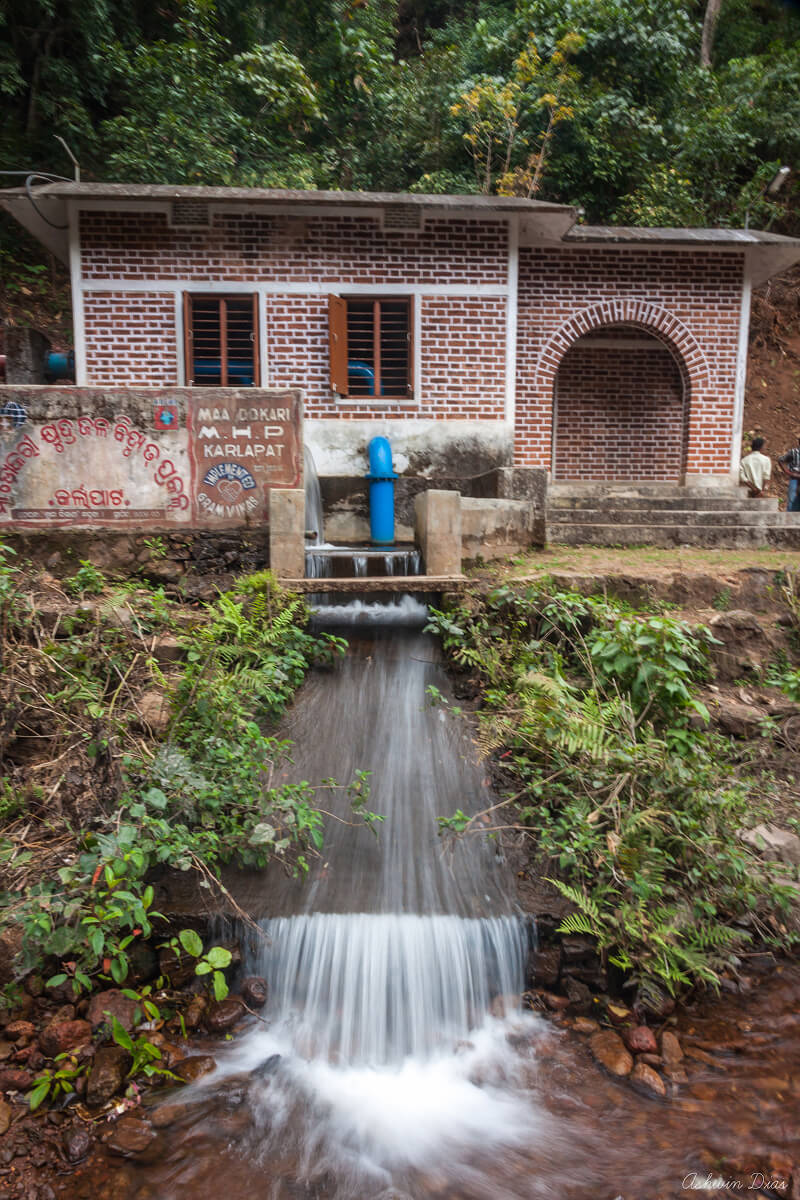
A new phase of work in renewable energy technologies began with projects in the Kalahandi district to set up micro-hydro power generation at the village level.
2004
A participatory process involving staff at all levels drafted a new Strategic Plan for Gram Vikas with revised statements of its vision and mission.
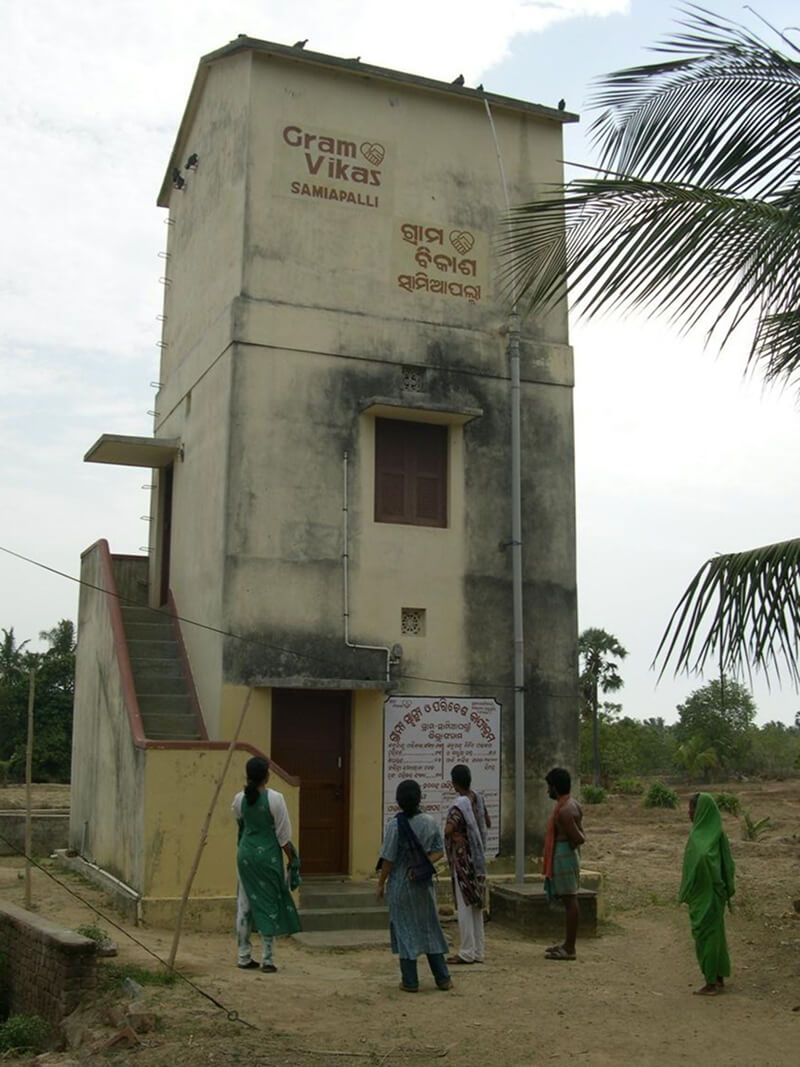
We designed the Movement and Action Network for Transformation of Rural Areas (MANTRA) approach based on the work experiences under RHEP. MANTRA became Gram Vikas' flagship programmatic framework that continues till today.
2005
Gram Vikas became a key implementer in the Swajaldhara scheme, a rural drinking water initiative launched by the Government of India and the Government of Odisha.
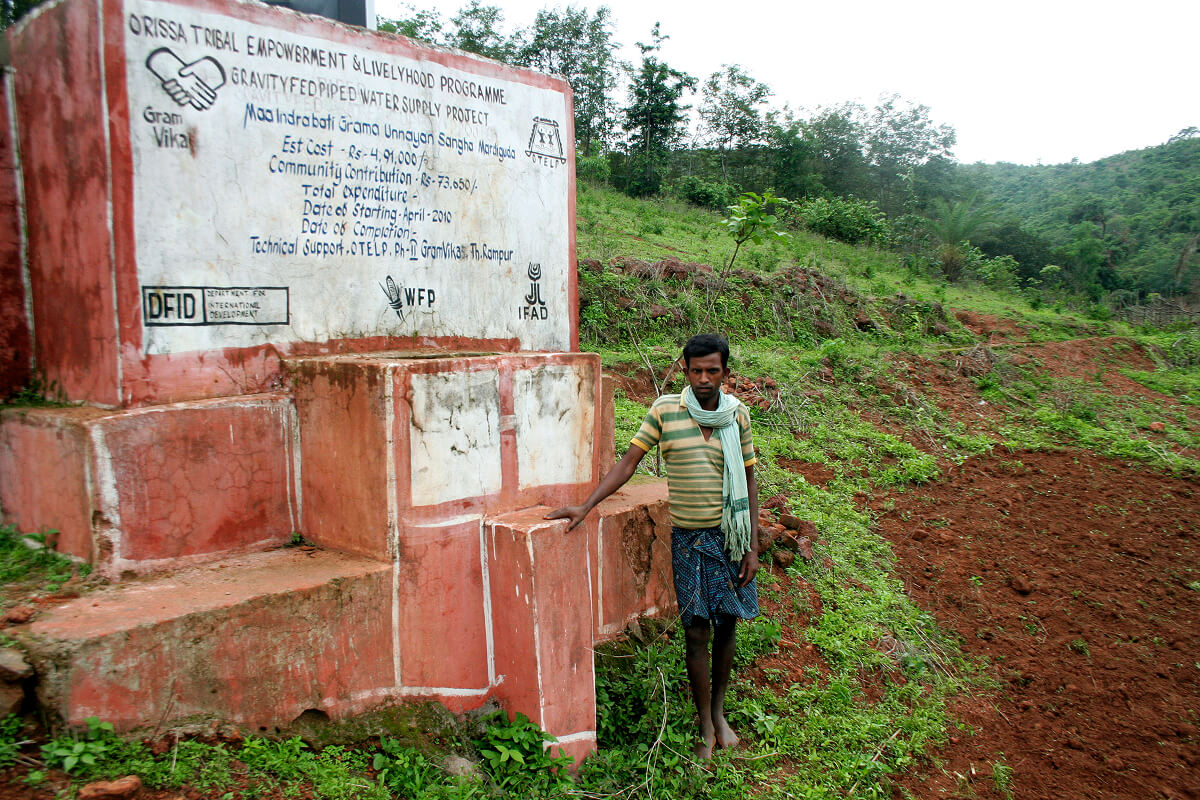
The Odisha Tribal Empowerment and Livelihoods Project (OTELP) launches with Gram Vikas as the implementing agency in Thuamul Rampur block of Kalahandi.
2006
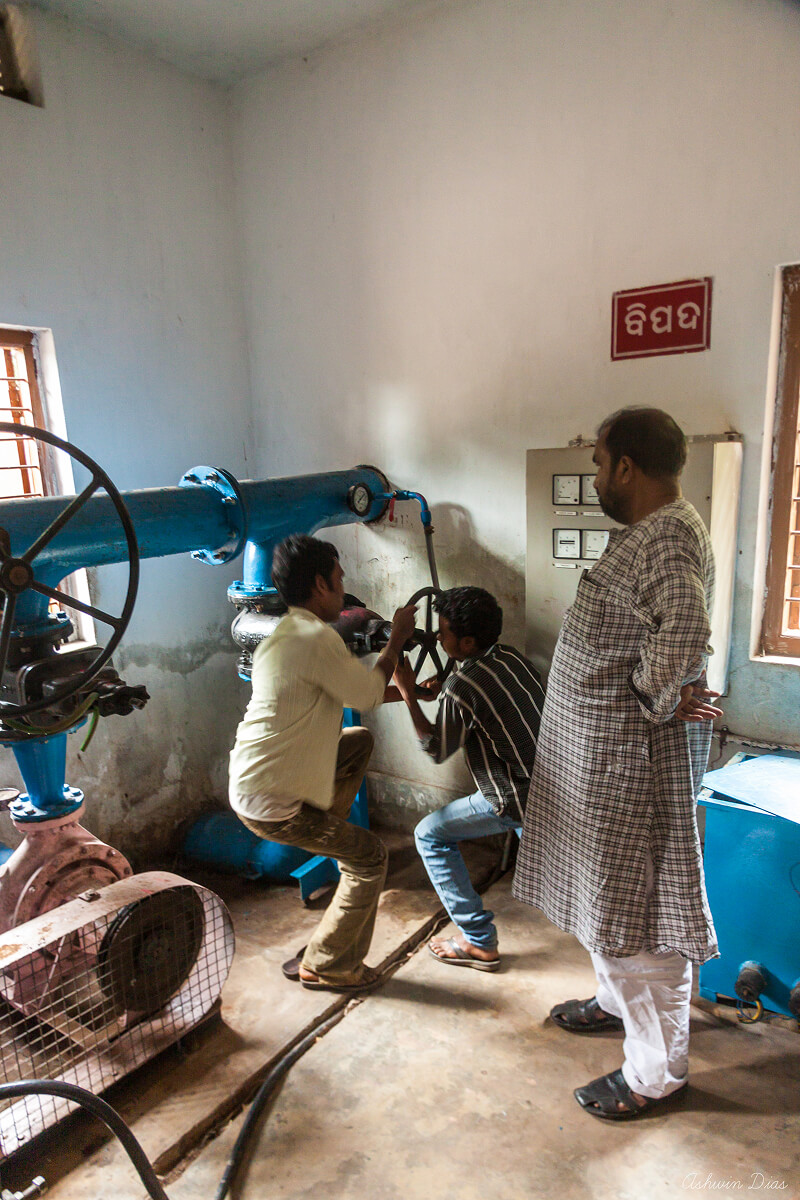
Work in decentralised electricity generation through micro-hydro projects in Kalahandi expanded to more villages.
2008
Gram Vikas' work crossed the boundaries of Odisha. We forged partnerships with local partners in Madhya Pradesh and Jharkhand to take the MANTRA approach forward.
2009
The MANTRA approach went international to promote community-based sanitation and water in partnership with an organisation in The Gambia.
The Fourth Decade
The fourth decade saw us expanding our reach, strengthening work with the government, forging effective corporate partnerships and transitioning to new leadership.
2010
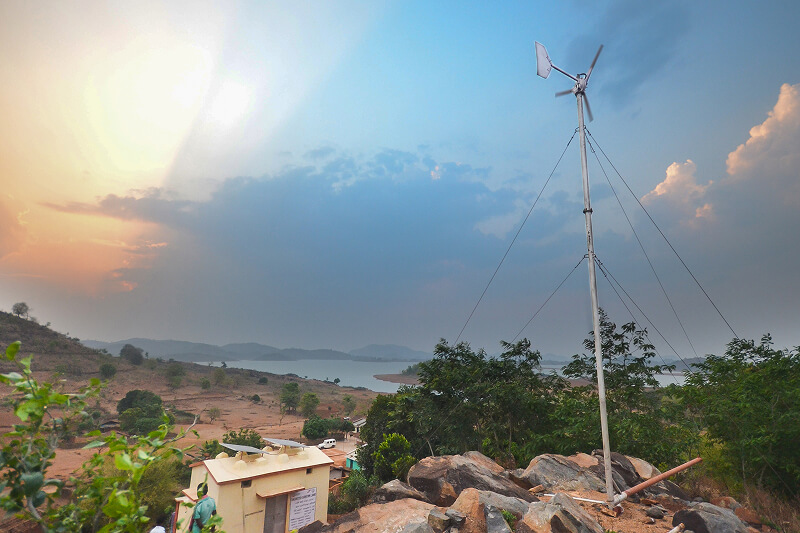
Maligaon in Thuamul Rampur block became the first village to be fully electrified using solar power in Kalahandi district, diversifying Gram Vikas’ work in renewable energy.
Gram Vikas entered its first Corporate Social Responsibility (CSR) partnership with the Rourkela Steel Plant of the Steel Authority of India in the Sundargarh district.
2011
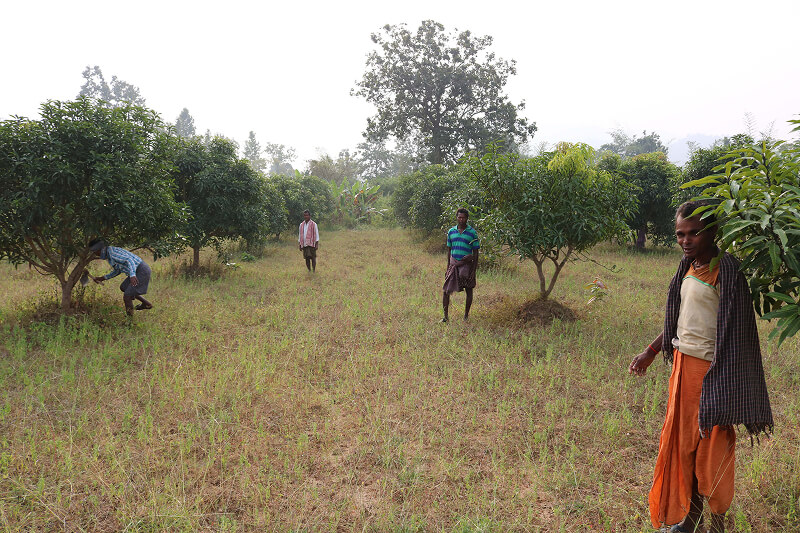
A new partnership with NABARD for the WADI Project in the Ganjam district resulted in setting up a Producer Company with over 450 members.
2012
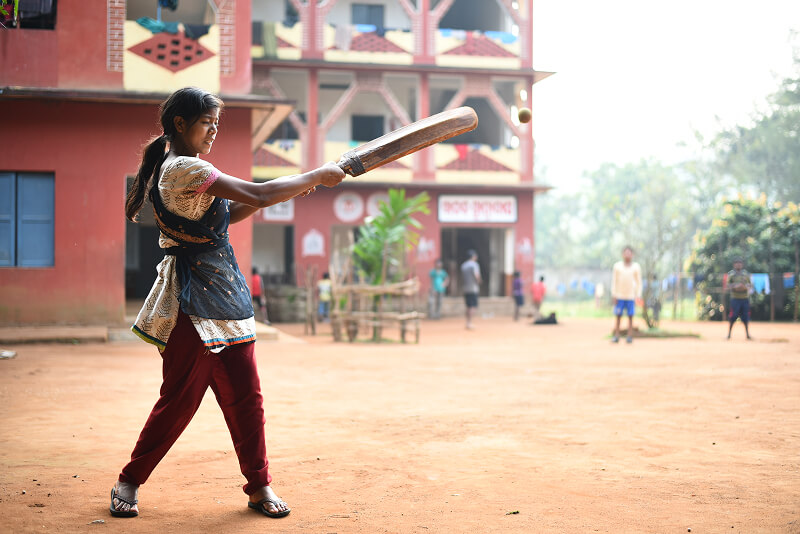
‘Khel Vikas’ – a partnership between Gram Vikas and Pro4Sport Solutions was launched to promote the theme of ‘Right to Play’ among the children of Gram Vikas residential schools.
2013
The Odisha Tribal Empowerment and Livelihoods Project (OTELP) partnership extended to the Koinpur area of Gajapati district.
2014
After 35 years at the helm of Gram Vikas, Joe Madiath retired from his role as Executive Director, ushering in a leadership transition in the organisation.
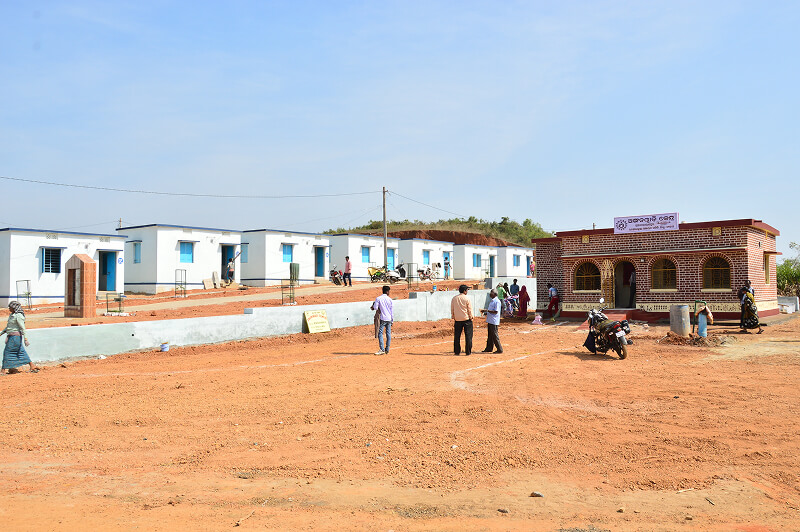
Gram Vikas entered a new phase of working with the Government of Odisha. We became the socio-technical partner for implementing the World Bank-funded Odisha Disaster Recovery Project to build disaster-resilient habitats for people affected by Cyclone Phailin.
2015
Partnership with the SBI Foundation for the Youth for India Fellowship began enabling educated, predominantly urban professionals to engage in grassroots development work.
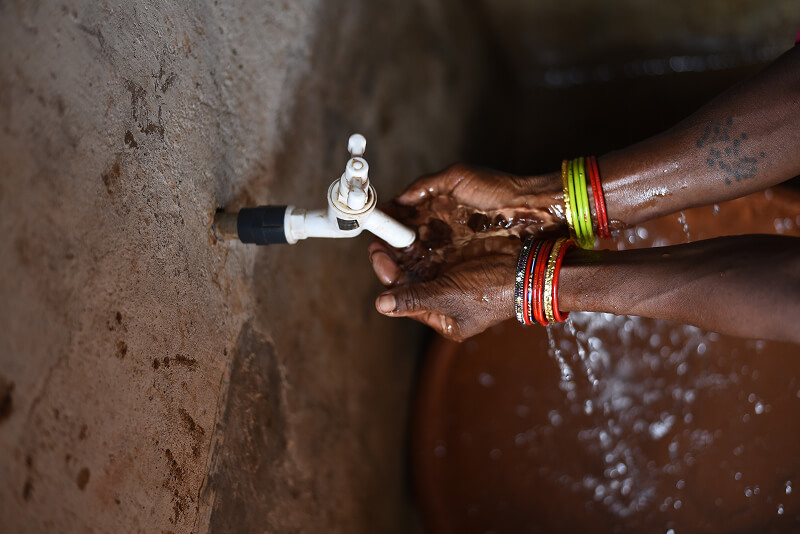
The London School of Hygiene and Tropical Medicine, London, UK; Emory University, Atlanta, Georgia, USA; and the KIIT University, Bhubaneswar, Odisha, India initiated the ‘matched cohort study to assess the effectiveness of a combined household-level piped water and sanitation intervention in rural Odisha, India’, in villages in Ganjam and Gajapati district.
2016
Gram Vikas opened a field office in Gumla in Jharkhand, the first direct intervention set up outside Odisha. Till then, work outside Odisha was in the form of technical assistance to local partner organisations.
2018
Relief and rehabilitation work by Gram Vikas supported remote villages in Gajapati and Ganjam districts affected by Cyclone Titli to restore drinking water systems and learn skills for new livelihood opportunities.
We undertook an extensive Status Assessment Survey to understand the condition of the integrated water and sanitation infrastructure and institutional systems built from 1997 to 2017.
Gram Vikas built a new website to enhance its online presence, showcase its initiatives, engage with stakeholders, and share information about its work as part of a new digital strategy.
2019
Gram Vikas Decade V, the strategic direction for the fifth decade of Gram Vikas, is approved to build on the achievements, experiences and lessons from the past 40 years of our work.
A broad spectrum of partnerships supported the expansion of our programmes, entry into newer geographies in need, enhanced use of technology and addressing new priorities.
We continued to build piped water supply systems and sanitation infrastructure in new villages, revived a solar electricity microgrid, and deployed GIS and geo-hydrology principles for springshed-based water resource management.
Gram Vikas started working on making migration a safe and dignified experience for young people and their families from Southern Odisha.
Our academic collaboration produced new evidence on safe child faeces management practices in rural Odisha, deepening the scope of our work in sanitation.
The Fifth Decade
Gram Vikas embarked on the fifth decade with a renewed commitment to deepen collaboration with community partners in Odisha. We completed 50 years in Mohuda, found new programmatic paths, and built many new partnerships.
2020
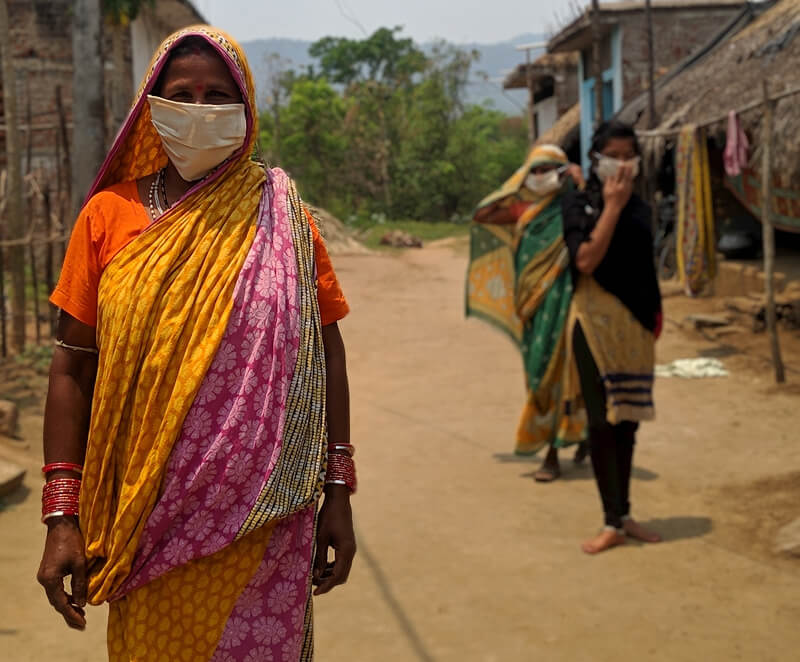
Gram Vikas worked together with the Government of Odisha, Gram Panchayats, and multiple donors to support village communities and migrant workers affected by the COVID-19 pandemic and nation-wide lockdowns.
Work began on designing the Water Secure Gram Panchayat and the Safe and Dignified Migration programmes.
In partnership with the United Nations Development Programme (UNDP), we worked on strengthening access to social protection and entitlements for most vulnerable households.
2021
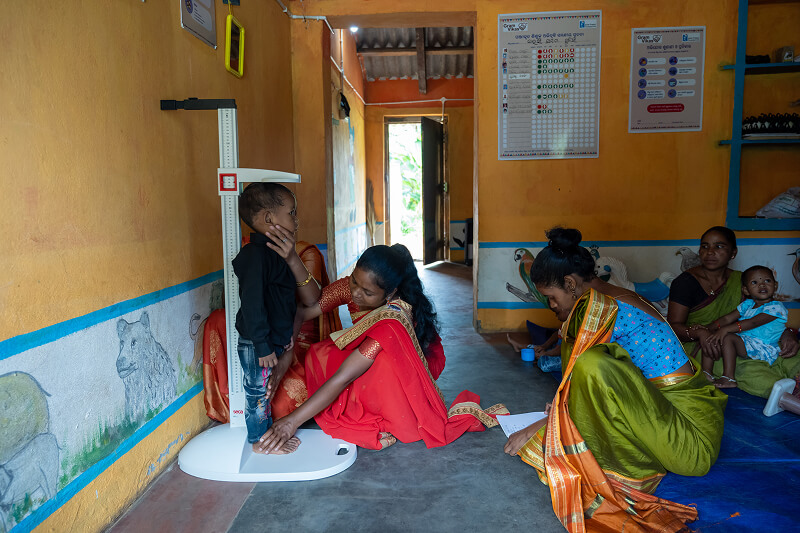
The Water Secure Gram Panchayat (WSGP) programme started in 27 Gram Panchayats in five districts of Odisha with support from the Azim Premji Foundation.
2022
Three new donor partners supported the expansion of the Water Secure Gram Panchayat programme to over 1,000 villages, strengthening community-led systems and women’s leadership.
Gram Vikas initiated the 'Learning from the Past, Reading the Present, Planning for Future' (LP-RP-PF) reflection to consider shifts in our environment and draw on four decades of learning to guide future direction.
2023
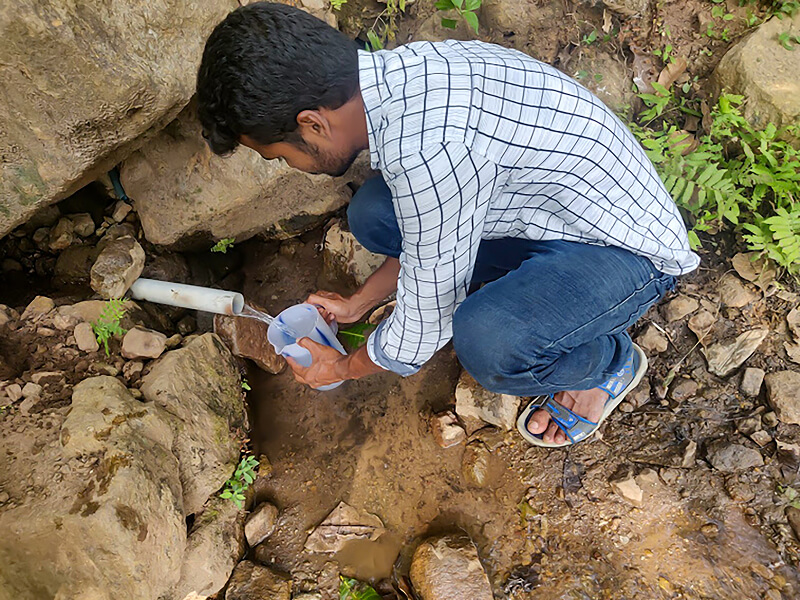
New partnerships initiated Gram Vikas' entry into comprehensive early childhood care and nutrition and large-scale women's enterprise development across Odisha.
With another three-year collaboration, we started a deeper exploration of factors affecting climate resilience and ways to enable community-led climate resilience initiatives in the Eastern Ghats regions of Odisha and Jharkhand.
2025
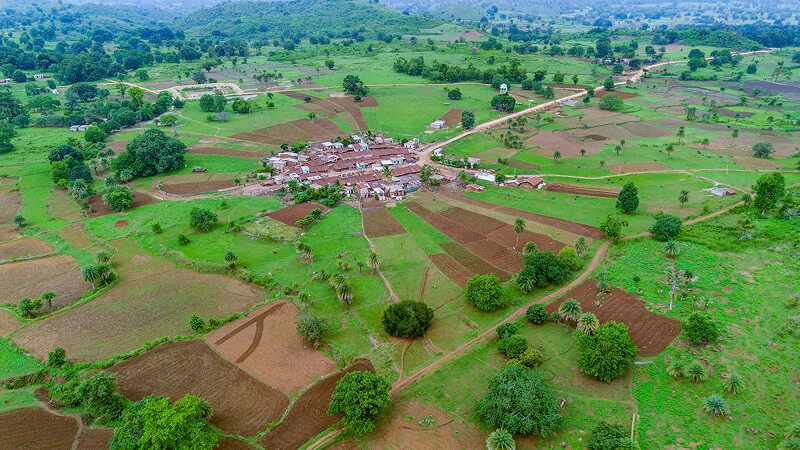
The origins of Gram Vikas’s work in Mohuda reached a fifty-year milestone, reflecting a long-term and deep engagement with rural communities.
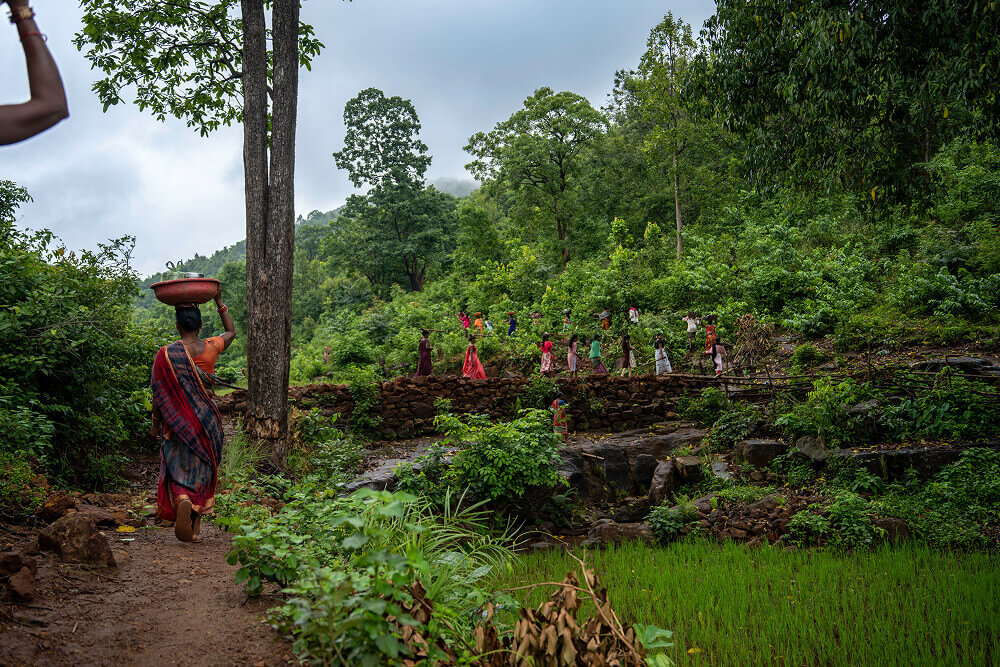
The launch of the Water Secure Gram Panchayat Network and the Village Saathi Initiative signalled a renewed focus on collective, place-based systems.
The milestone coincided with founder Joe Madiath turning 75.
Featured Resource
People, Communities & Development in Rural Orissa: A compendium of case studies from Gram Vikas
This compendium of 16 case studies illuminates the grassroots processes that underpin our work. They show how communities move from sellers of labour to owners of capital, how women’s leadership drives social change, and how shared investments in water and sanitation bind villages and open pathways to dignified futures.
Read More

Collaboration has been central to how our work has evolved over five decades.
DISCOVER OUR PARTNERS